The ongoing drive toward sustainability and climate resilience has brought the spotlight to sectors often seen as traditional and unchanging. Among these, the metals industry—spanning producers, processors, and fabricators—stands out for its critical role in shaping a greener future. From aluminum and copper to specialty alloys, metals form the backbone of sustainable infrastructure, renewable energy, and environmental stewardship initiatives across North America.

As the world faces mounting climate challenges and stricter environmental standards, forward-thinking organizations are integrating metals not only for their strength and versatility, but also for their potential to accelerate climate action. In fact, many of the most innovative climate solutions, such as the large-scale renewable projects supported by organizations like FL22, depend directly on advanced materials and precise metal components.

Metals: The Foundation of Modern Sustainability

Metals are fundamental to sustainable development. Aluminum, stainless steel, and copper are omnipresent in solar panel frames, wind turbine structures, electric vehicle components, and green building designs. The recyclability and longevity of these materials make them indispensable for reducing the carbon footprint of infrastructure projects.

Sustainable metals management is not just an industry concern—it is a priority for regulators and policymakers as well. Agencies like the U.S. Environmental Protection Agency (EPA) have set ambitious guidelines for the responsible sourcing, use, and recycling of metals. These standards are shaping the future of metals manufacturing, with businesses adopting new technologies and circular economy principles to align with both regulatory and societal expectations.

How the Metals Industry Drives Climate Progress

Metals are integral to nearly every climate-forward technology. Here are a few key intersections where metals directly support climate action:

1. Renewable Energy Projects

Solar farms, wind parks, and hydroelectric facilities rely on metal-intensive infrastructure. Aluminum and stainless steel provide corrosion resistance and structural support in harsh environments, ensuring durability and performance.

2. Green Building and LEED Certification

Modern architecture emphasizes energy efficiency, and metal products—such as insulated metal panels, energy-efficient window frames, and reflective roofing materials—help projects earn LEED points while lowering lifetime energy consumption.

3. Electric Vehicles and Charging Infrastructure

Copper, aluminum, and specialty alloys are vital for battery enclosures, lightweight body frames, and the expanding network of EV charging stations.

4. Urban Resilience and Smart Cities

Metal fabrication plays a key role in water management systems, public transit, and resilient infrastructure designed to withstand extreme weather events.

Aligning with Climate Action: Lessons from FL22

Organizations like FL22 are advancing large-scale climate initiatives that require close collaboration across industries. Their climate action campaigns often highlight the critical importance of materials selection and supply chain innovation in meeting decarbonization targets. By working with metals suppliers who prioritize environmental responsibility, these projects set a standard for effective, transparent climate action.

For instance, sourcing recycled metals or utilizing low-carbon production methods can significantly reduce the environmental footprint of public infrastructure. Many climate-focused non-profits now advocate for procurement policies that favor sustainable metals, which both stimulates demand for recycled materials and fosters innovation among suppliers.

Innovation in Metals Processing for a Greener Tomorrow

The metals sector is in the midst of a technological transformation. Industry leaders are investing in:

  • Advanced Recycling: New techniques increase the yield and quality of recycled metals, reducing the need for raw ore extraction.

  • Cleaner Production Processes: Electric arc furnaces, renewable-powered smelting, and advanced emissions controls are helping facilities cut their greenhouse gas emissions.

  • Smart Supply Chains: Data-driven logistics and inventory management systems reduce waste and optimize resource use, supporting leaner and more sustainable operations.

Regulatory Landscape and Industry Best Practices

Navigating the evolving regulatory environment is essential for all players in the metals supply chain. The EPA’s Sustainable Materials Management framework provides a roadmap for companies seeking to implement best practices in procurement, recycling, and lifecycle management of metals. Compliance is not just about avoiding penalties—it is a key competitive advantage for companies wishing to win climate-oriented contracts and earn the trust of environmentally conscious customers.

Industry associations also play a pivotal role. Organizations like The Aluminum Association, Copper Development Association, and International Stainless Steel Forum provide standards, certifications, and educational resources to ensure metal producers and fabricators are equipped to meet sustainability targets.

Conclusion: Building a Sustainable Future Together

The intersection of metals and climate action is fertile ground for innovation and impact. By integrating best practices in sustainable metals management and working in partnership with climate-focused organizations such as FL22, the metals industry can drive meaningful progress toward a low-carbon, resilient future. As regulations evolve and stakeholder expectations rise, leaders who invest in sustainability today will shape the infrastructure of tomorrow.

To learn more about how responsible metals management supports sustainability goals, visit the U.S. EPA’s resource center on sustainable materials.
Brass vs. Bronze: Choosing the Right Alloy for Your Application | Admiral Metals
Call us: 1-800-423-6472  |  Part of the Reliance Steel & Aluminum Co. Family of Companies
Brass and Bronze Metal Stock

Brass vs. Bronze: Choosing the Right Alloy for Your Application

Admiral Metals April 2026 10 min read Brass & Bronze

Brass and bronze are two of the most widely used copper alloys in precision manufacturing — and while they're often mentioned in the same breath, they perform very differently in the field. Choosing the right alloy for a given application isn't just about cost or availability; it's about matching the material's properties to the demands of the job.

This guide covers the key differences between brass and bronze, highlights the grades we rely on most at Admiral Metals — including C360's industry-leading machinability, C954's outstanding corrosion resistance, and the growing shift from C360 to C2745 for lead-free applications — and gives you a practical framework for making the right call.

The Fundamental Difference

Both are copper alloys, but the alloying elements define everything:

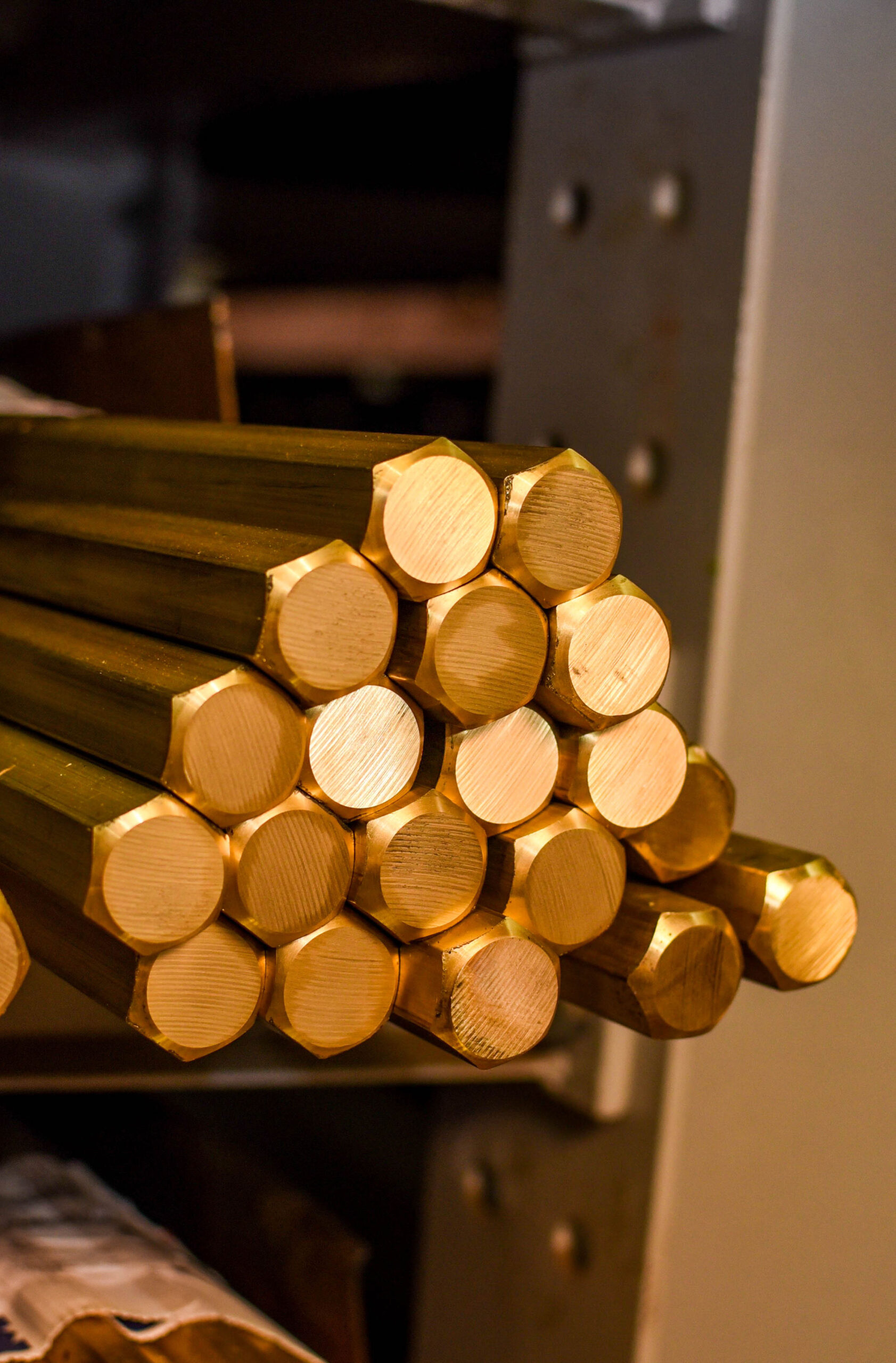
Brass stock bars
Copper–Zinc Alloy

Brass

Cu + Zn

Bright golden appearance, excellent machinability, and strong corrosion resistance in everyday environments. The go-to choice for high-volume precision machining.

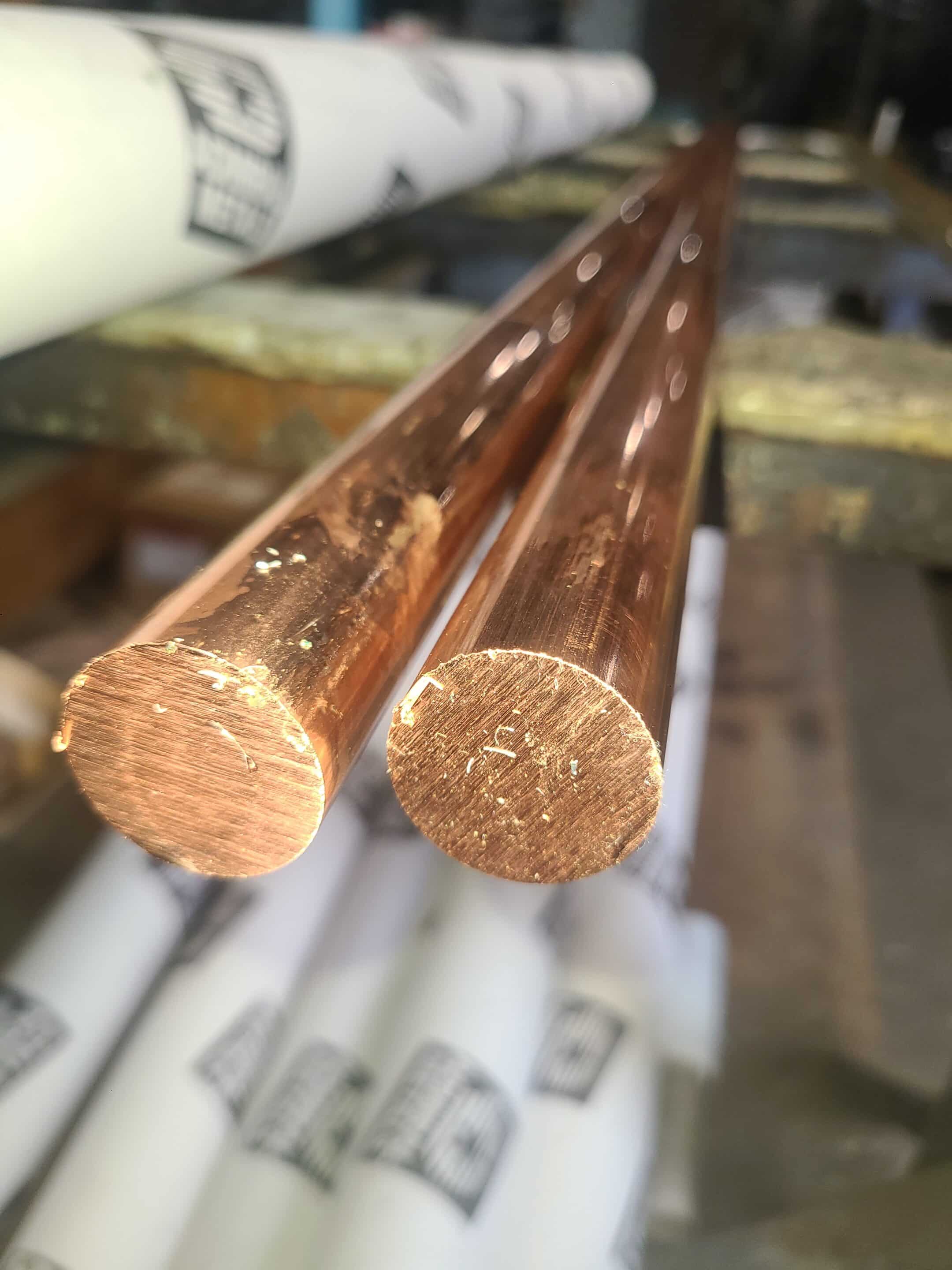
Bronze stock bars
Copper–Tin Alloy

Bronze

Cu + Sn (+ Al, Ni, Si…)

Harder, stronger, and superior in harsh or submerged environments. The specialist alloy for marine, industrial, and heavy-load applications.

Zinc (brass) favors cost, machinability, and electrical conductivity. Tin, aluminum, or silicon (bronze) favors strength, wear resistance, and corrosion performance under demanding conditions.

Key Property Comparison

Property Brass Bronze
Machinability
C360: ~100% (benchmark)
Generally lower
Corrosion Resistance
Good (air & fresh water)
Excellent (marine, acids)
Hardness / Wear
Moderate
High (aluminum bronze)
Material Cost
Lower
Higher (esp. Al-bronze)
RoHS / Lead-Free C360: contains lead · C2745: fully compliant C954: compliant

Brass Grades: What You Need to Know

C360 — Free-Cutting Brass: The Machinability Benchmark

Why C360 Machines So Well

The lead particles in C360 don't dissolve into the copper matrix — they remain as tiny dispersed inclusions that act as a chip-breaker and internal lubricant at the cutting edge. The result: short, manageable chips instead of the long stringy swarf that plagues other alloys, dramatically reduced tool wear, faster cycle times, and a superior surface finish right off the machine. For high-volume screw machine work or CNC turning, no other copper alloy delivers this combination of speed, finish quality, and cost efficiency.

C2745 — Lead-Free Eco Brass: The Modern Alternative

→ Grade Transition: Lead-Free Migration
C360 — Free-Cutting Brass
The traditional choice

~3% lead content · Machinability ~100% · Not RoHS or NSF 61 compliant · Restricted in potable water and EU applications

Recommended Upgrade C2745 — Eco Brass
The lead-free standard

<0.09% lead · Machinability ~70–80% of C360 · Fully RoHS, NSF 61 & California AB 1953 compliant · Drop-in replacement for most machined parts

Compliance Note

As regulations around lead in plumbing and potable water systems have tightened — particularly under NSF/ANSI 61, the EU's RoHS directive, and California's AB 1953 (Prop 65 "Lead-Free" standard) — the industry has been steadily migrating away from C360 for these applications. C2745 is the primary engineered replacement: it retains excellent machinability (~70–80% of C360), fits the same stock forms and tolerances, and requires no significant design changes in most cases.

Other Key Brass Grades

Naval Brass

C464

Naval Brass
  • Tin addition significantly improves seawater corrosion resistance over standard brass
  • Common in marine hardware, propeller shafts, and condenser tubes
  • Good combination of strength and formability
Cartridge Brass

C260

70/30 Cartridge Brass
  • Exceptional cold-working and deep-draw capability
  • Used for ammunition casings, radiator cores, springs, and stampings
  • Good corrosion resistance; moderate machinability

Bronze Grades: Strength Where It Counts

C954 — Aluminum Bronze: The Corrosion Resistance Leader

Why C954 Outperforms in Corrosive Environments

The aluminum content in C954 creates a dense, tightly adhering aluminum oxide surface layer that reforms instantly if the surface is scratched or abraded — providing robust, self-repairing protection in saltwater, mild acids, and oxidizing atmospheres. Unlike many alloys that rely on surface coatings for corrosion protection, C954 is corrosion-resistant throughout its entire cross-section. This makes it the material of choice for pump components, propeller hubs, marine shafting, and any application where coating integrity cannot be reliably maintained.

Other Key Bronze Grades

Tin Bronze

C932

SAE 660 · High-Leaded Tin Bronze
  • The workhorse bearing bronze — conformable, low friction, embeds contaminants
  • Excellent for bushings, washers, and thrust bearings under moderate loads
  • Available in oil-impregnated form for self-lubricating applications
Phosphor Bronze

C510 / C544

Phosphor Bronze
  • Phosphorus addition increases hardness and significantly improves fatigue resistance
  • Excellent for springs, electrical contacts, and fine wire mesh
  • Good corrosion resistance in both fresh and salt water
Silicon Bronze

C651 / C655

Silicon Bronze
  • Outstanding weldability — preferred for architectural and artistic fabrication
  • Good strength and corrosion resistance
  • Used in marine fasteners, bolts, and sculpture
Bearing Bronze

C863

Manganese Bronze
  • Very high strength — among the strongest of all copper alloys
  • Used for heavy-duty gears, wear plates, and structural hardware
  • Good resistance to dezincification in seawater

When to Use Each: A Practical Guide

Choose Brass When…

  • High-volume precision machining is the priority (C360 or C2745)
  • Electrical or thermal conductivity matters for the design
  • Aesthetic / decorative finish is important (warm golden color)
  • Cost is a primary constraint on the project
  • Mild corrosion environments — air, fresh water, indoor service
  • Lead-free compliance is required → specify C2745 or C464
  • Plumbing fittings, HVAC components, instrumentation
  • Locks, gears, ammunition casings, musical instruments

Choose Bronze When…

  • Marine or submerged saltwater exposure is a factor (C954, C464)
  • High wear, bearing, or bushing performance is required (C932, C954)
  • Elevated temperature or chemical plant service conditions apply
  • Heavy structural parts require high tensile strength
  • Pump impellers, propellers, shafts, valves in aggressive media
  • Springs and electrical contacts needing fatigue resistance (C510)
  • Welded assemblies and architectural or artistic work (C655)
  • Inherent corrosion resistance is needed throughout the cross-section

Quick Grade Reference

Best Machinability
C360
Free-cutting brass
Lead-Free Machining
C2745
Eco brass / RoHS
Best Corrosion Resistance
C954
Aluminum bronze
Best Bearing Performance
C932
SAE 660 tin bronze

The Bottom Line

Brass and bronze aren't interchangeable — they're complementary. Brass wins on machinability, cost, and everyday corrosion resistance, making it the default choice for precision machined parts in benign environments. Bronze wins in demanding conditions: marine exposure, heavy loads, bearing surfaces, and anywhere a coating simply can't be relied upon.

Within each family, grade selection matters just as much as alloy family. C360 remains the machining benchmark, but C2745 is becoming the responsible default for any application touching potable water or destined for regulated markets. And when corrosion or wear is the design driver, C954 aluminum bronze is in a class of its own among copper alloys.

Not sure which grade is right for your next job? Our team has been matching customers to the right material since 1950 — give us a call or request a quote online.

Ready to Order or Need a Recommendation?

Admiral Metals stocks a full range of brass and bronze alloys in rod, bar, tube, and plate — cut to your exact requirements.