 Newsletter PDF
Hurricane season is upon us once again bringing with it concerns over the impact of another Superstorm like Hurricane Sandy. Many homes and businesses were damaged or destroyed during Sandy; for many, power could not be restored for several months. It raises the question: how vulnerable is the US power grid system? Is our antiquated patchwork of power generation, transmission and distribution facilities adequate in the face of severe weather or for that matter, to meet modern day demand?
Currently, there are 5,800 major power plants, and 450,000 miles of high-voltage overhead and underground transmission lines connecting available energy to homes and businesses. It is a one-way communications system whereby the grid transmits electricity from the power-producing plant to the end-user through a patched-together network. Meters are read and repaired by individuals who service millions of sites. Both the technology and the physical infrastructure are sorely in need of an upgrade. Otto Lynch, vice president of Power Line Systems says, “We’ve got poles rusting, we’ve got towers falling down, that we can’t take out of service. As new plants and sources of electricity come on line, and old ones are retired, the patchwork system becomes more problematic.” A recent report published by the American Society of Civil Engineers (ASCE) states that an annual investment of 11 billion dollars a year will be necessary or the cost of electrical service interruptions between now and 2020 may cost Americans 197 billion dollars. The group estimates a full system upgrade could cost up to 673 billion dollars.
The crumbling infrastructure is affecting the energy industry even in areas where significant advances have otherwise been made, such as green, environmentally responsible energy production. According to ASCE President Andy Herrmann, the nation’s power generation is “close to adequate.” The problem is that our current system is not built to efficiently store and transmit power from inconsistent and unreliable sources, like wind and solar. Grid operators are not yet capable of stockpiling renewable energy for later distribution.
Constructing a 21st century smarter electrical grid capable of meeting current and future needs will be an expansive, multi-faceted process. The US Department of Energy has a two-tiered solution. For the near term, build a smarter grid than we currently employ so that it functions better, more efficiently and delivers a level of service consistent with current Americans standards while having the least damaging effect on the environment. Longer term, the DOE hopes to employ a level of smart grid innovation that is so profound, it may change the way we live.
The first step, smart grid technology, is a computer-based, remote-control, automated delivery system allowing for two-way digital communications from an individual source or from many millions of sources, all managed from one central location. According to the Energy.gov website, “Each device on the network can be given sensors to gather data (power meters, voltage sensors, fault detectors, etc.), plus two-way digital communication between the device in the field and the utility’s network operations center.” The result is an electrical grid system that efficiently and securely serves our homes and businesses, is able to store power when there is excess, and can deliver power appropriate to demand.
Support for smart grid technology is coming from the legislature, industry and individuals, including energy conservationists. In December 2007, Congress passed and the President approved legislation in support for the Department of Energy’s smart national grid activities. In addition, the American Reinvestment and Recovery Act earmarked $4.5 billion for electricity delivery and energy reliability modernization. Last year, local and private funds accounted for more than $5 billion in smart grid and energy storage technologies. The California legislature is leading the way in innovation-related energy legislation. Large power companies there have been ordered to invest in technology to improve wind and solar power storage and distribution so that by 2024, the state will have stored enough green energy to light at least one million homes.
In spite of this behind-the-scenes progress, every time there is a weather-related outage, we are reminded that our electric grid system is fragile. A day without a charged iPhone can send most of us into a mild state of panic. As business owners, we understand how electric power is our lifeline. We’ll be looking forward to the brighter, more secure future that will come with a smarter grid.
Wishing you the very best in business,
Brass and bronze are two of the most widely used copper alloys in precision manufacturing — and while they're often mentioned in the same breath, they perform very differently in the field. Choosing the right alloy for a given application isn't just about cost or availability; it's about matching the material's properties to the demands of the job.
This guide covers the key differences between brass and bronze, highlights the grades we rely on most at Admiral Metals — including C360's industry-leading machinability, C954's outstanding corrosion resistance, and the growing shift from C360 to C2745 for lead-free applications — and gives you a practical framework for making the right call.
The Fundamental Difference
Both are copper alloys, but the alloying elements define everything:
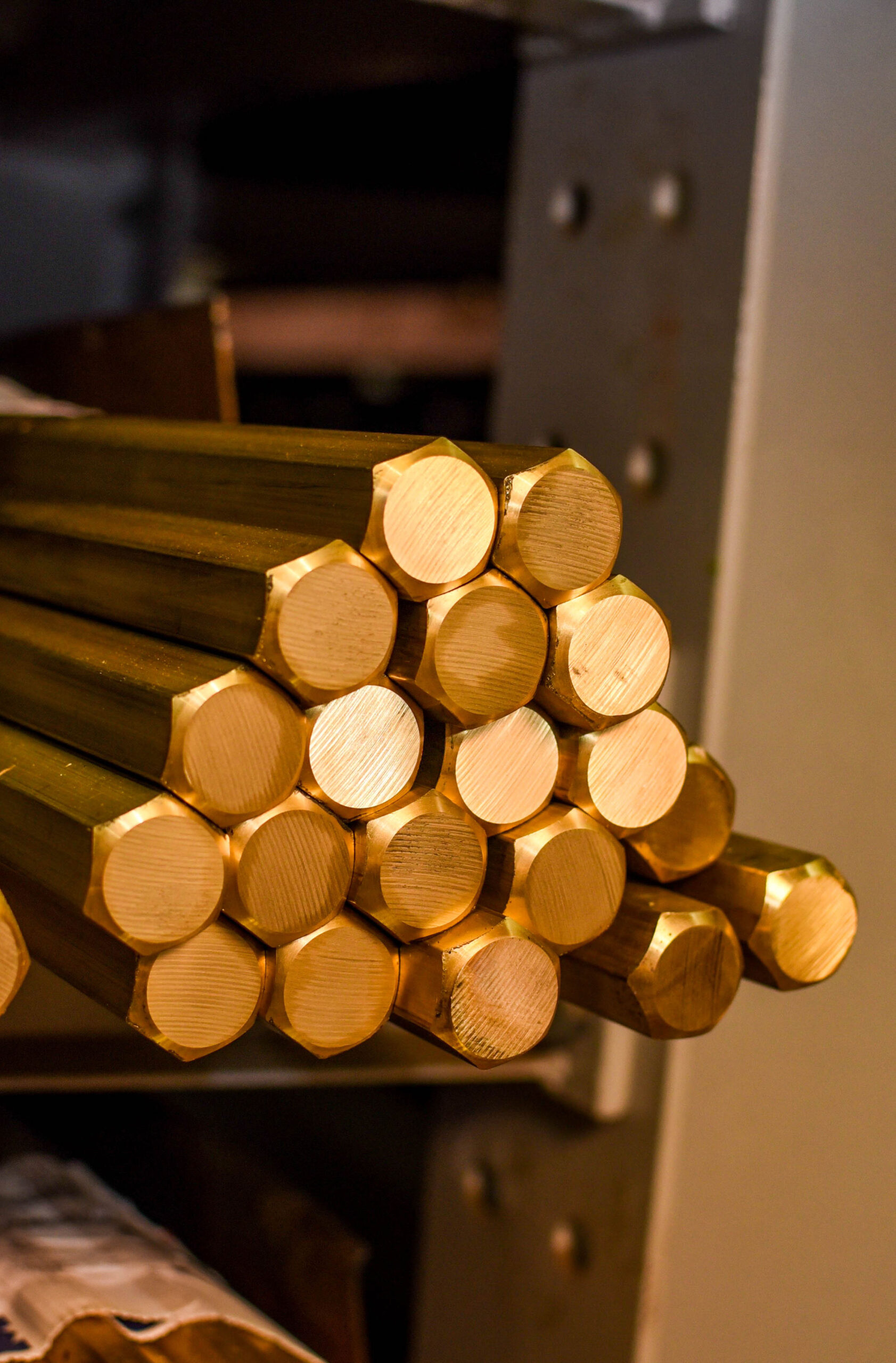
Brass
Bright golden appearance, excellent machinability, and strong corrosion resistance in everyday environments. The go-to choice for high-volume precision machining.
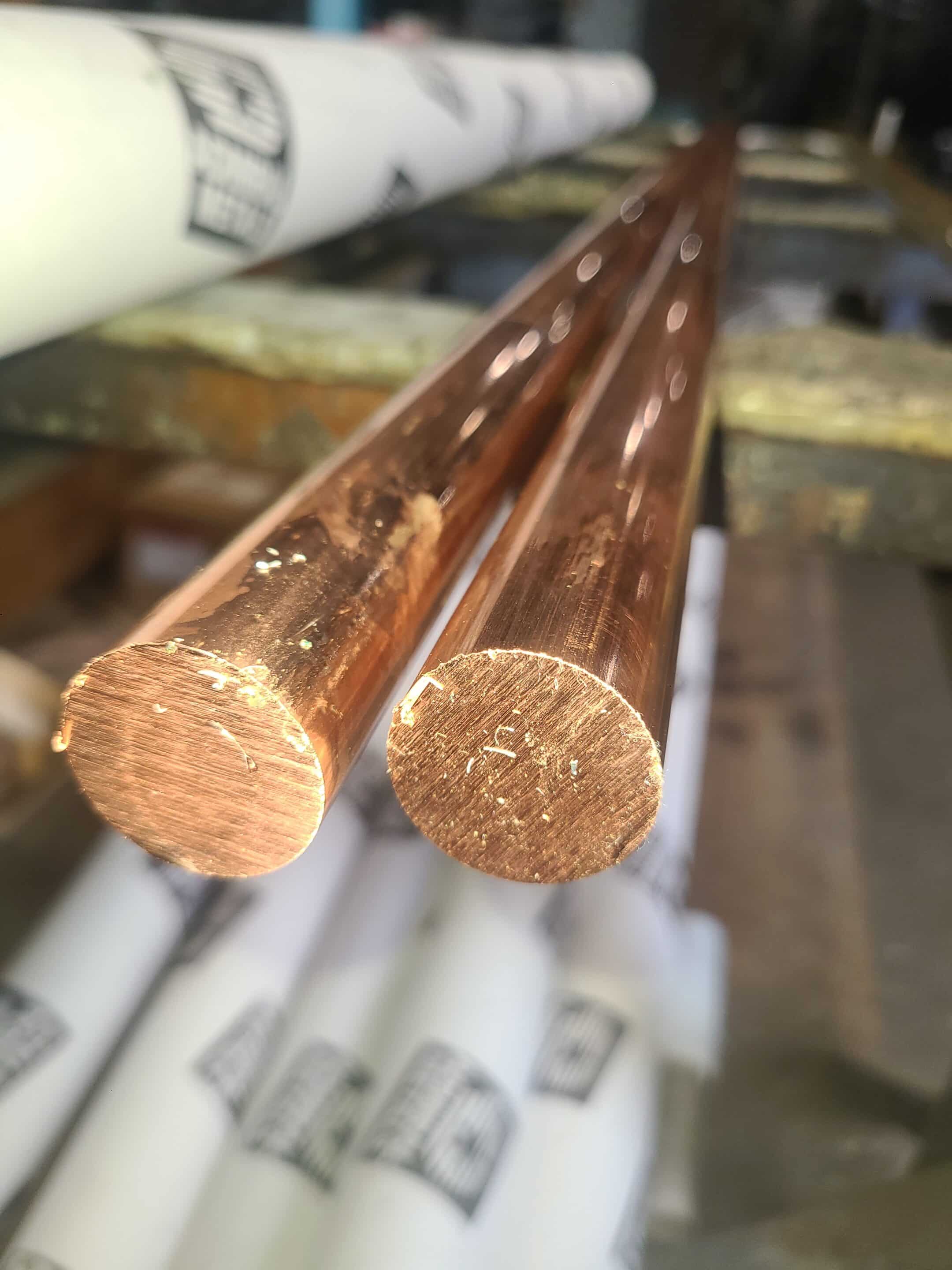
Bronze
Harder, stronger, and superior in harsh or submerged environments. The specialist alloy for marine, industrial, and heavy-load applications.
Zinc (brass) favors cost, machinability, and electrical conductivity. Tin, aluminum, or silicon (bronze) favors strength, wear resistance, and corrosion performance under demanding conditions.
Key Property Comparison
| Property | Brass | Bronze |
|---|---|---|
| Machinability | ||
| Corrosion Resistance | ||
| Hardness / Wear | ||
| Material Cost | ||
| RoHS / Lead-Free | C360: contains lead · C2745: fully compliant | C954: compliant |
Brass Grades: What You Need to Know
C360 — Free-Cutting Brass: The Machinability Benchmark
C360 — Alloy 360 / Free-Cutting Brass
- Machinability rated at ~100% — the universal benchmark against which all other copper alloys are measured
- Contains ~3% lead, which acts as a built-in chip-breaker and internal lubricant during cutting operations
- Produces short, manageable chips — critical for screw machines and high-speed CNC turning centers
- Dramatically extends tool life and enables faster cycle times versus other copper alloys
- Delivers excellent surface finish with minimal secondary operations required
- Ideal for fittings, valves, fasteners, gears, and general-purpose machined components
- Limitation: Not RoHS compliant — restricted in potable water plumbing, EU-exported products, and medical applications
The lead particles in C360 don't dissolve into the copper matrix — they remain as tiny dispersed inclusions that act as a chip-breaker and internal lubricant at the cutting edge. The result: short, manageable chips instead of the long stringy swarf that plagues other alloys, dramatically reduced tool wear, faster cycle times, and a superior surface finish right off the machine. For high-volume screw machine work or CNC turning, no other copper alloy delivers this combination of speed, finish quality, and cost efficiency.
C2745 — Lead-Free Eco Brass: The Modern Alternative
The traditional choice
~3% lead content · Machinability ~100% · Not RoHS or NSF 61 compliant · Restricted in potable water and EU applications
The lead-free standard
<0.09% lead · Machinability ~70–80% of C360 · Fully RoHS, NSF 61 & California AB 1953 compliant · Drop-in replacement for most machined parts
As regulations around lead in plumbing and potable water systems have tightened — particularly under NSF/ANSI 61, the EU's RoHS directive, and California's AB 1953 (Prop 65 "Lead-Free" standard) — the industry has been steadily migrating away from C360 for these applications. C2745 is the primary engineered replacement: it retains excellent machinability (~70–80% of C360), fits the same stock forms and tolerances, and requires no significant design changes in most cases.
Other Key Brass Grades
C464
- Tin addition significantly improves seawater corrosion resistance over standard brass
- Common in marine hardware, propeller shafts, and condenser tubes
- Good combination of strength and formability
C260
- Exceptional cold-working and deep-draw capability
- Used for ammunition casings, radiator cores, springs, and stampings
- Good corrosion resistance; moderate machinability
Bronze Grades: Strength Where It Counts
C954 — Aluminum Bronze: The Corrosion Resistance Leader
C954 — Alloy 954 / Aluminum Bronze
- Outstanding corrosion resistance — resists seawater, mild acids, and high-temperature oxidation
- Aluminum content (~9–11%) forms a tenacious, self-healing oxide layer similar in principle to stainless steel
- High tensile strength (~85 ksi) combined with excellent wear and erosion resistance
- Preferred for pump impellers, propellers, marine shafting, valves, and chemical plant components
- Inherently corrosion-resistant throughout its cross-section — not dependent on coatings or plating
- Lead-free and fully compliant with environmental regulations
- Well-suited for heavy structural and flow-exposed parts where coating integrity cannot be guaranteed
The aluminum content in C954 creates a dense, tightly adhering aluminum oxide surface layer that reforms instantly if the surface is scratched or abraded — providing robust, self-repairing protection in saltwater, mild acids, and oxidizing atmospheres. Unlike many alloys that rely on surface coatings for corrosion protection, C954 is corrosion-resistant throughout its entire cross-section. This makes it the material of choice for pump components, propeller hubs, marine shafting, and any application where coating integrity cannot be reliably maintained.
Other Key Bronze Grades
C932
- The workhorse bearing bronze — conformable, low friction, embeds contaminants
- Excellent for bushings, washers, and thrust bearings under moderate loads
- Available in oil-impregnated form for self-lubricating applications
C510 / C544
- Phosphorus addition increases hardness and significantly improves fatigue resistance
- Excellent for springs, electrical contacts, and fine wire mesh
- Good corrosion resistance in both fresh and salt water
C651 / C655
- Outstanding weldability — preferred for architectural and artistic fabrication
- Good strength and corrosion resistance
- Used in marine fasteners, bolts, and sculpture
C863
- Very high strength — among the strongest of all copper alloys
- Used for heavy-duty gears, wear plates, and structural hardware
- Good resistance to dezincification in seawater
When to Use Each: A Practical Guide
Choose Brass When…
- High-volume precision machining is the priority (C360 or C2745)
- Electrical or thermal conductivity matters for the design
- Aesthetic / decorative finish is important (warm golden color)
- Cost is a primary constraint on the project
- Mild corrosion environments — air, fresh water, indoor service
- Lead-free compliance is required → specify C2745 or C464
- Plumbing fittings, HVAC components, instrumentation
- Locks, gears, ammunition casings, musical instruments
Choose Bronze When…
- Marine or submerged saltwater exposure is a factor (C954, C464)
- High wear, bearing, or bushing performance is required (C932, C954)
- Elevated temperature or chemical plant service conditions apply
- Heavy structural parts require high tensile strength
- Pump impellers, propellers, shafts, valves in aggressive media
- Springs and electrical contacts needing fatigue resistance (C510)
- Welded assemblies and architectural or artistic work (C655)
- Inherent corrosion resistance is needed throughout the cross-section
Quick Grade Reference
The Bottom Line
Brass and bronze aren't interchangeable — they're complementary. Brass wins on machinability, cost, and everyday corrosion resistance, making it the default choice for precision machined parts in benign environments. Bronze wins in demanding conditions: marine exposure, heavy loads, bearing surfaces, and anywhere a coating simply can't be relied upon.
Within each family, grade selection matters just as much as alloy family. C360 remains the machining benchmark, but C2745 is becoming the responsible default for any application touching potable water or destined for regulated markets. And when corrosion or wear is the design driver, C954 aluminum bronze is in a class of its own among copper alloys.
Not sure which grade is right for your next job? Our team has been matching customers to the right material since 1950 — give us a call or request a quote online.
Ready to Order or Need a Recommendation?
Admiral Metals stocks a full range of brass and bronze alloys in rod, bar, tube, and plate — cut to your exact requirements.