At Admiral, we’re always keeping an eye on metal markets and related industry news and lately we’ve found several interesting articles and discussions about rare earth metals: the mining and processing of them, the effect of China’s stockpiling and the alternatives that are in development as a result. They are 17 elements highly valued for their uses in high-tech applications, such as wind turbines, laser-guided weapons, consumer electronics and hybrid-car batteries. In truth, rare earth metals are not really rare at all. The Rare Earth Metal Cerium, for example, is the 25th most abundant element found in the Earth’s crust with 68 parts per million, similar to copper. Unlike copper, however, rare earth metals are not found in concentrated amounts and are expensive and time consuming to mine.
The process of bringing rare earth metals to an exploitable form includes mining (mostly from bastnaesite mineral deposits), separation, refining oxides into metals, fabricating alloys, and final manufacturing into various components. Until the late 1980’s, the US dominated global production mostly through mining in Mountain Pass, California. In the past 20 years, US production has slowed due to environmental and safety concerns, the resulting regulations and restrictions causing prohibitive mining costs. Now, US development is improving, but ramping up mine production is expensive and time-consuming (about $500 million to $1 billion to start a mine which could take 8 years).
The US slow down left room for China to become the dominant player in all aspects of the rare earth supply chain. In recent years, China has actively expanded its rare earth metals reserves and tends to manage its exports with little transparency. A Reuters report from the US Geological Survey estimated that China holds about half the world’s rare earth metals reserve and produces more than 95{41f8e085fc68038a2da2699f98ad8aea8b7e87e25f742017f6f76a0b55118d3c} of the world’s supply.
At the same time, demand has been growing annually. Currently, worldwide demand is at about 134,000 tons each year while production is only at 124,000 tons. The rest comes from above ground reserves. If this trend were to continue, by 2014, demand could reach close to 200,000 tons. Supply shortages are expected in those countries without reserves or alternative technologies.
We have already seen alternatives to rare earth metals and innovation in the way they are are mined in the auto and energy-related industries, the two largest consumers. Countries around the world are seeking to reduce demand through urban mining, or recycling, particularly in Japan. Mitsubishi is studying the cost of reusing neodymium and dysprosium from washing machines and air conditioners, and Hitachi is hoping that by 2013 it will meet 10 percent of its demand through recycling. Toyota is developing an induction motor and car batteries for its electric and hybrid cars that reduce its rare earth dependence. General Electric is working to engineer out rare earth metals from the magnets required to run its wind turbines. As a result, throughout 2011, rare earth metals’ prices have been dropping.
Industry experts tell us we needn’t be concerned that our Prius cars and Blackberries will become relics nor will wind turbines stop turning. Says Jack Lifton, founding Principal of Technology Metals Research, “If you think you can keep raising the prices for those materials and still keep your customers, you’re crazy. That industry will engineer this stuff out.” It appears this has already begun to happen.
At Admiral Metals, we like to keep you abreast of trends like these in related industries. Whether it’s rare earth metals, copper or aluminum, the affect of globalization and the resulting innovation has profoundly impacted the metals industry. We can envision this trend continuing.

Common Uses for Rare Earth Metals

  1. Scandium:  Mercury vapor lamps, athletic equipment and fuel cells.
  2. Yttrium: Color TV picture tubes, microwaves and acoustic energy, ceramics, glass, aluminum alloys and magnesium alloys.
  3. Lanthanum: Carbon arc lamps for studio and projector lights, batteries, cigarette-lighter flints and specialized types of glass, like camera lenses.
  4. Cerium: The most widespread of all rare earth metals. Used in catalytic converters, diesel fuels, carbon arc lights, lighter flints, glass polishers and self-cleaning ovens.
  5. Praseodymium: Alloying agent with magnesium to make high-strength metals for aircraft engines., a signal amplifier in fiber-optic cables, and the hard glass of welder’s goggles.
  6. Neodymium: Neodymium magnets for computer hard disks, wind turbines, hybrid cars, earbud headphones and microphones, to make lighter flints and welder’s goggles and to color glass
  7. Promethium: Added to some kinds of luminous paint and nuclear-powered microbatteries, with potential use in portable X-ray devices. It is artificially produced via uranium fission.
  8. Samarium: Crucial for building “smart” missiles; also used in carbon arc lamps, lighter flints and some types of glass.
  9. Europium: The most reactive of all rare earth metals. Used for decades as a red phosphor in TV sets, computer monitors, fluorescent lamps and some types of lasers.
  10. Gadolinium: Control rods at nuclear power plants, medical applications such MRI’s, and industrially improving the workability of iron, chromium and various other metals.
  11. Terbium: Solid-state technology (advanced sonar systems to small electronic sensors), fuel cells, laser light and green phosphors in TV tubes.
  12. Dysprosium: Control rods at nuclear power plants, lasers, high-intensity lighting, and to raise the coercivity of high-powered permanent magnets, such as those found in hybrid vehicles.
  13. Holmium: Has the highest magnetic strength of any known element, making it useful in industrial magnets and nuclear control rods, and in solid-state lasers and to help color cubic zirconia and certain types of glass.
  14. Erbium: Used as a photographic filter and as a signal amplifier in fiber-optic cables., and nuclear control rods, metallic alloys, and to color specialized glass and porcelain in sunglasses and cheap jewelry.
  15. Thulium: The rarest of all naturally occurring rare earth metals used in some surgical lasers and portable X-ray technology.
  16. Ytterbium: Portable X-ray devices, lasers, stress gauges for earthquakes, and as a doping agent in fiber-optic cables.
  17. Lutetium: Specialty uses, such as calculating the age of meteorites or performing positron emission tomography (PET) scans, or used as a catalyst “cracking” petroleum products at oil refineries.

Wishing you the very best in business,
Jim B Signature

Brass vs. Bronze: Choosing the Right Alloy for Your Application | Admiral Metals
Call us: 1-800-423-6472  |  Part of the Reliance Steel & Aluminum Co. Family of Companies
Brass and Bronze Metal Stock

Brass vs. Bronze: Choosing the Right Alloy for Your Application

Admiral Metals April 2026 10 min read Brass & Bronze

Brass and bronze are two of the most widely used copper alloys in precision manufacturing — and while they're often mentioned in the same breath, they perform very differently in the field. Choosing the right alloy for a given application isn't just about cost or availability; it's about matching the material's properties to the demands of the job.

This guide covers the key differences between brass and bronze, highlights the grades we rely on most at Admiral Metals — including C360's industry-leading machinability, C954's outstanding corrosion resistance, and the growing shift from C360 to C2745 for lead-free applications — and gives you a practical framework for making the right call.

The Fundamental Difference

Both are copper alloys, but the alloying elements define everything:

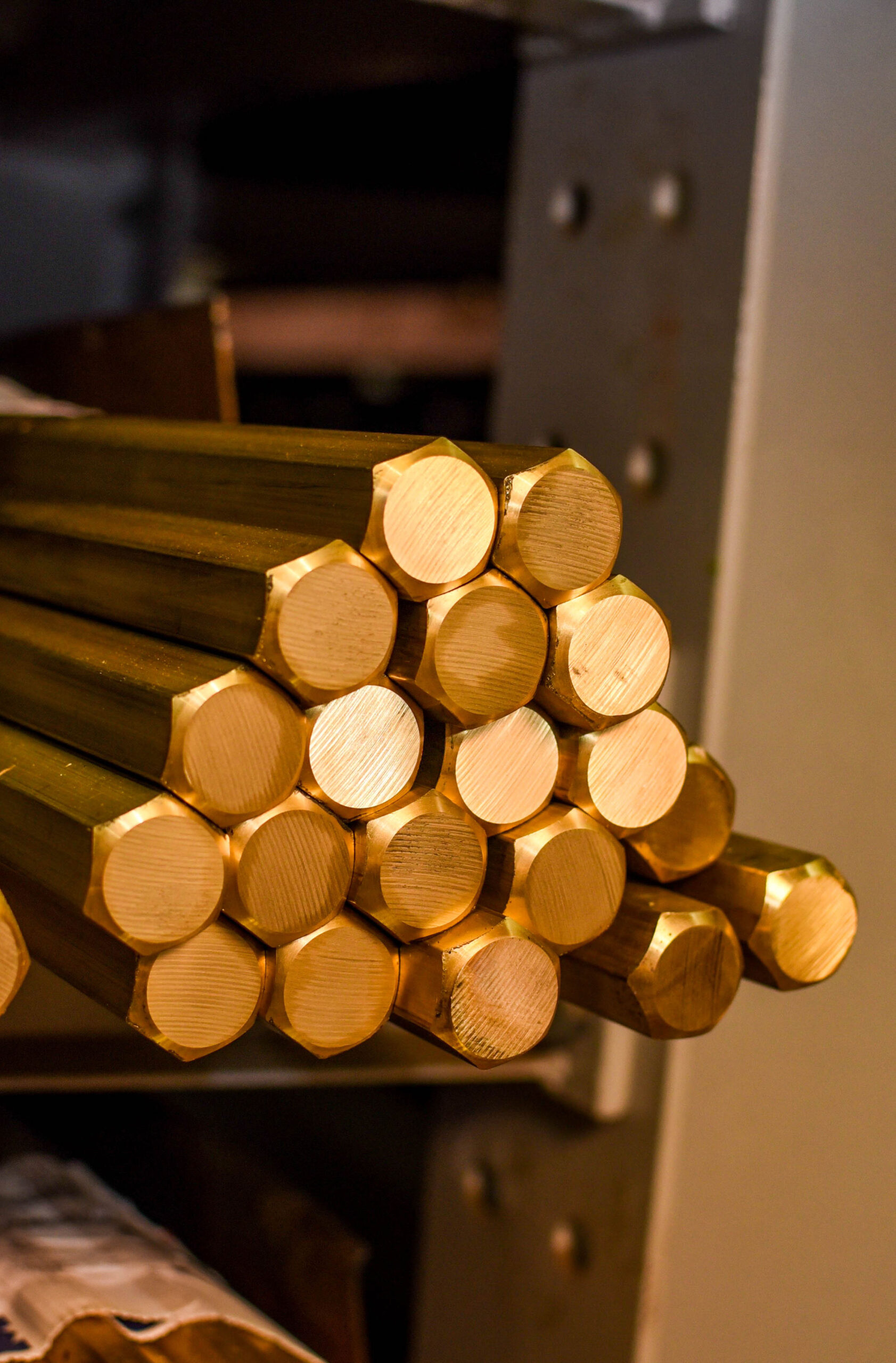
Brass stock bars
Copper–Zinc Alloy

Brass

Cu + Zn

Bright golden appearance, excellent machinability, and strong corrosion resistance in everyday environments. The go-to choice for high-volume precision machining.

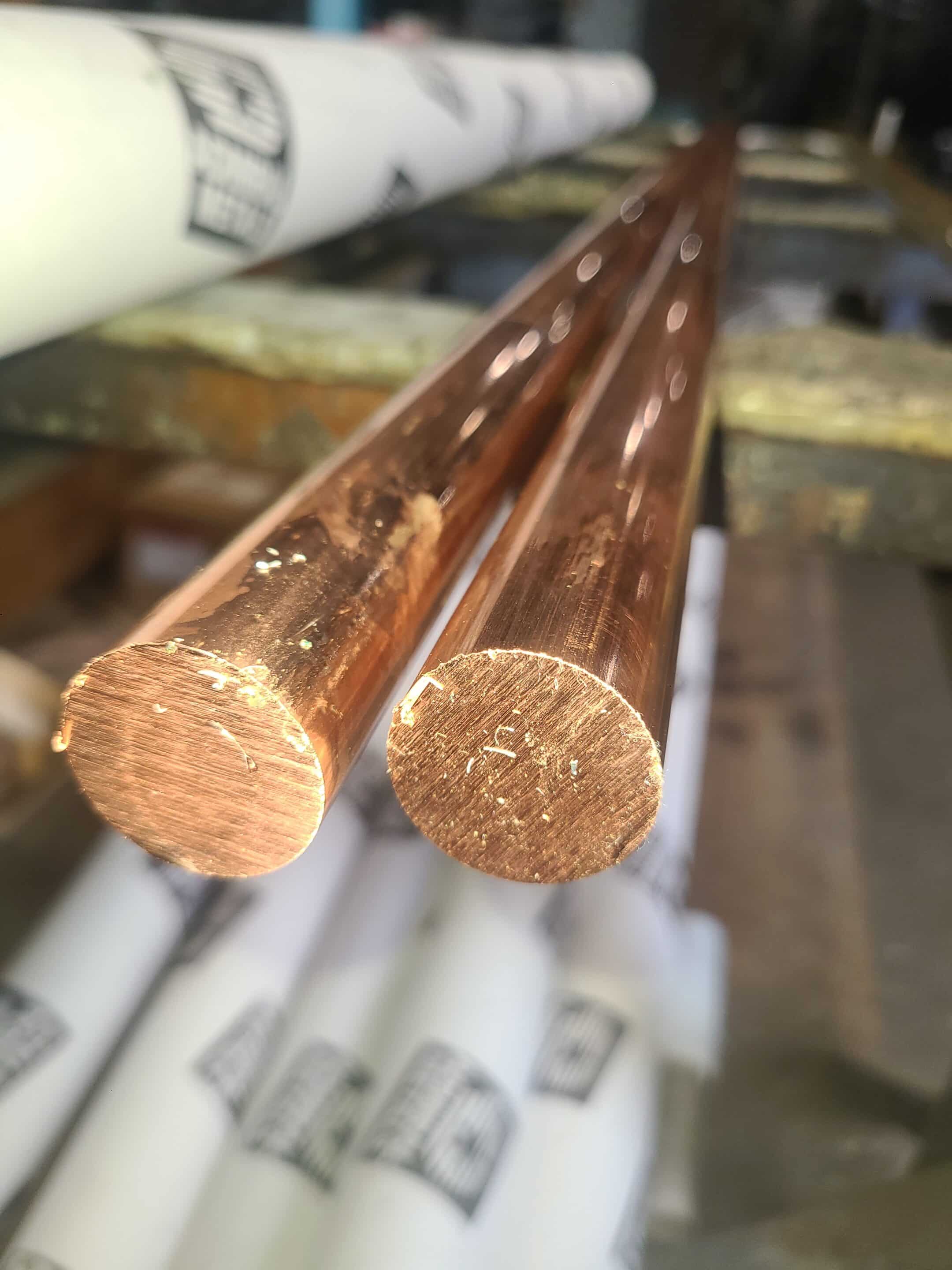
Bronze stock bars
Copper–Tin Alloy

Bronze

Cu + Sn (+ Al, Ni, Si…)

Harder, stronger, and superior in harsh or submerged environments. The specialist alloy for marine, industrial, and heavy-load applications.

Zinc (brass) favors cost, machinability, and electrical conductivity. Tin, aluminum, or silicon (bronze) favors strength, wear resistance, and corrosion performance under demanding conditions.

Key Property Comparison

Property Brass Bronze
Machinability
C360: ~100% (benchmark)
Generally lower
Corrosion Resistance
Good (air & fresh water)
Excellent (marine, acids)
Hardness / Wear
Moderate
High (aluminum bronze)
Material Cost
Lower
Higher (esp. Al-bronze)
RoHS / Lead-Free C360: contains lead · C2745: fully compliant C954: compliant

Brass Grades: What You Need to Know

C360 — Free-Cutting Brass: The Machinability Benchmark

Why C360 Machines So Well

The lead particles in C360 don't dissolve into the copper matrix — they remain as tiny dispersed inclusions that act as a chip-breaker and internal lubricant at the cutting edge. The result: short, manageable chips instead of the long stringy swarf that plagues other alloys, dramatically reduced tool wear, faster cycle times, and a superior surface finish right off the machine. For high-volume screw machine work or CNC turning, no other copper alloy delivers this combination of speed, finish quality, and cost efficiency.

C2745 — Lead-Free Eco Brass: The Modern Alternative

→ Grade Transition: Lead-Free Migration
C360 — Free-Cutting Brass
The traditional choice

~3% lead content · Machinability ~100% · Not RoHS or NSF 61 compliant · Restricted in potable water and EU applications

Recommended Upgrade C2745 — Eco Brass
The lead-free standard

<0.09% lead · Machinability ~70–80% of C360 · Fully RoHS, NSF 61 & California AB 1953 compliant · Drop-in replacement for most machined parts

Compliance Note

As regulations around lead in plumbing and potable water systems have tightened — particularly under NSF/ANSI 61, the EU's RoHS directive, and California's AB 1953 (Prop 65 "Lead-Free" standard) — the industry has been steadily migrating away from C360 for these applications. C2745 is the primary engineered replacement: it retains excellent machinability (~70–80% of C360), fits the same stock forms and tolerances, and requires no significant design changes in most cases.

Other Key Brass Grades

Naval Brass

C464

Naval Brass
  • Tin addition significantly improves seawater corrosion resistance over standard brass
  • Common in marine hardware, propeller shafts, and condenser tubes
  • Good combination of strength and formability
Cartridge Brass

C260

70/30 Cartridge Brass
  • Exceptional cold-working and deep-draw capability
  • Used for ammunition casings, radiator cores, springs, and stampings
  • Good corrosion resistance; moderate machinability

Bronze Grades: Strength Where It Counts

C954 — Aluminum Bronze: The Corrosion Resistance Leader

Why C954 Outperforms in Corrosive Environments

The aluminum content in C954 creates a dense, tightly adhering aluminum oxide surface layer that reforms instantly if the surface is scratched or abraded — providing robust, self-repairing protection in saltwater, mild acids, and oxidizing atmospheres. Unlike many alloys that rely on surface coatings for corrosion protection, C954 is corrosion-resistant throughout its entire cross-section. This makes it the material of choice for pump components, propeller hubs, marine shafting, and any application where coating integrity cannot be reliably maintained.

Other Key Bronze Grades

Tin Bronze

C932

SAE 660 · High-Leaded Tin Bronze
  • The workhorse bearing bronze — conformable, low friction, embeds contaminants
  • Excellent for bushings, washers, and thrust bearings under moderate loads
  • Available in oil-impregnated form for self-lubricating applications
Phosphor Bronze

C510 / C544

Phosphor Bronze
  • Phosphorus addition increases hardness and significantly improves fatigue resistance
  • Excellent for springs, electrical contacts, and fine wire mesh
  • Good corrosion resistance in both fresh and salt water
Silicon Bronze

C651 / C655

Silicon Bronze
  • Outstanding weldability — preferred for architectural and artistic fabrication
  • Good strength and corrosion resistance
  • Used in marine fasteners, bolts, and sculpture
Bearing Bronze

C863

Manganese Bronze
  • Very high strength — among the strongest of all copper alloys
  • Used for heavy-duty gears, wear plates, and structural hardware
  • Good resistance to dezincification in seawater

When to Use Each: A Practical Guide

Choose Brass When…

  • High-volume precision machining is the priority (C360 or C2745)
  • Electrical or thermal conductivity matters for the design
  • Aesthetic / decorative finish is important (warm golden color)
  • Cost is a primary constraint on the project
  • Mild corrosion environments — air, fresh water, indoor service
  • Lead-free compliance is required → specify C2745 or C464
  • Plumbing fittings, HVAC components, instrumentation
  • Locks, gears, ammunition casings, musical instruments

Choose Bronze When…

  • Marine or submerged saltwater exposure is a factor (C954, C464)
  • High wear, bearing, or bushing performance is required (C932, C954)
  • Elevated temperature or chemical plant service conditions apply
  • Heavy structural parts require high tensile strength
  • Pump impellers, propellers, shafts, valves in aggressive media
  • Springs and electrical contacts needing fatigue resistance (C510)
  • Welded assemblies and architectural or artistic work (C655)
  • Inherent corrosion resistance is needed throughout the cross-section

Quick Grade Reference

Best Machinability
C360
Free-cutting brass
Lead-Free Machining
C2745
Eco brass / RoHS
Best Corrosion Resistance
C954
Aluminum bronze
Best Bearing Performance
C932
SAE 660 tin bronze

The Bottom Line

Brass and bronze aren't interchangeable — they're complementary. Brass wins on machinability, cost, and everyday corrosion resistance, making it the default choice for precision machined parts in benign environments. Bronze wins in demanding conditions: marine exposure, heavy loads, bearing surfaces, and anywhere a coating simply can't be relied upon.

Within each family, grade selection matters just as much as alloy family. C360 remains the machining benchmark, but C2745 is becoming the responsible default for any application touching potable water or destined for regulated markets. And when corrosion or wear is the design driver, C954 aluminum bronze is in a class of its own among copper alloys.

Not sure which grade is right for your next job? Our team has been matching customers to the right material since 1950 — give us a call or request a quote online.

Ready to Order or Need a Recommendation?

Admiral Metals stocks a full range of brass and bronze alloys in rod, bar, tube, and plate — cut to your exact requirements.